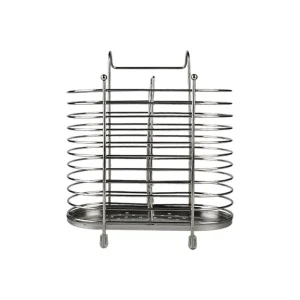
Stainless steel wire rack Supplier & Exporters

Global Industrial-Grade Storage Systems & Advanced Stainless Steel Fabrication. Certified Strength. Custom Engineering. Decades of Supply Chain Excellence.

$40M+
Annual Export Volume
100+
Countries Served
15+
Years Industry Expertise
100%
FDA / NSF Compliant Materials

Industrial Significance of Stainless Steel Wire Racks

A comprehensive examination of physical durability, metallurgical standards, and optimization in global storage ecosystems.

1. Material Selection & Metallurgy: The Shield Against Degradation

In industrial warehousing, catering, and cold-chain logistics, storage racks are continually subjected to mechanical strain, ambient moisture, and harsh sanitizing chemicals. To maintain mechanical integrity and prevent surface degradation, premium suppliers specify Austenitic Stainless Steel (AISI 304 and 316). The microstructural composition of these alloys contains high levels of Chromium (minimum 18%) and Nickel (minimum 8%), ensuring the spontaneous formation of a passive chromium oxide layer. This self-healing boundary prevents oxidation at the atomic level, resisting pitting in saline or high-humidity environments.

For heavy-duty and chemical processing applications, AISI 316 stainless steel is integrated with 2-3% Molybdenum to significantly elevate its Pitting Resistance Equivalent Number (PREN). This prevents localized chloride-induced pitting corrosion, making it the industry benchmark for laboratory environments and coastal food processing facilities.

2. Structural Engineering & Resistance Spot Welding Integrity

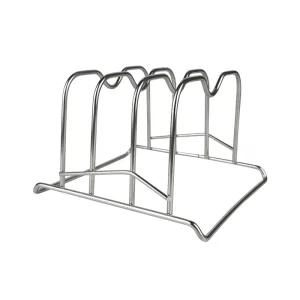
The load-bearing profile of a stainless steel wire rack depends entirely on wire configuration, spacing, and weld reliability. The core architecture comprises a structural support frame (outer wire gauge typically ranging from 6.0mm to 8.0mm), inner support trusses (4.5mm to 5.0mm), and deck wires (3.0mm to 3.5mm).

Our manufacturing utilizes advanced, automated multi-point resistance welding systems. The process applies precise, synchronized current and pressure at the intersection of the wires. This fuses the alloy at the molecular level without generating excessive heat that could induce thermal stress, distort the grid, or deplete chromium levels at the weld boundary (weld decay).

Macro-Industry Solutions & Custom Parameters

Engineered storage platforms configured to meet the dynamic operational stresses of distinct global vertical sectors.

Cold Storage & Logistics
Withstanding extreme temperature cycles (-40°C to +80°C) in refrigerated warehouses. Prevent moisture gathering and frost development, promoting optimal ventilation.
Cleanrooms & Bio-pharma
Electropolished surface finishes eliminate microscopic cracks where dust, bacteria, or spores could harbor. Minimizes turbulence in laminar flow ventilation pathways.
Automated Intralogistics
Built with high structural flatness and strict dimensional tolerance controls, allowing automated guided vehicles (AGVs) and robotic pickers to execute seamless operations.

About Chaozhou Jinrenkang Hardware Products Co., Ltd.

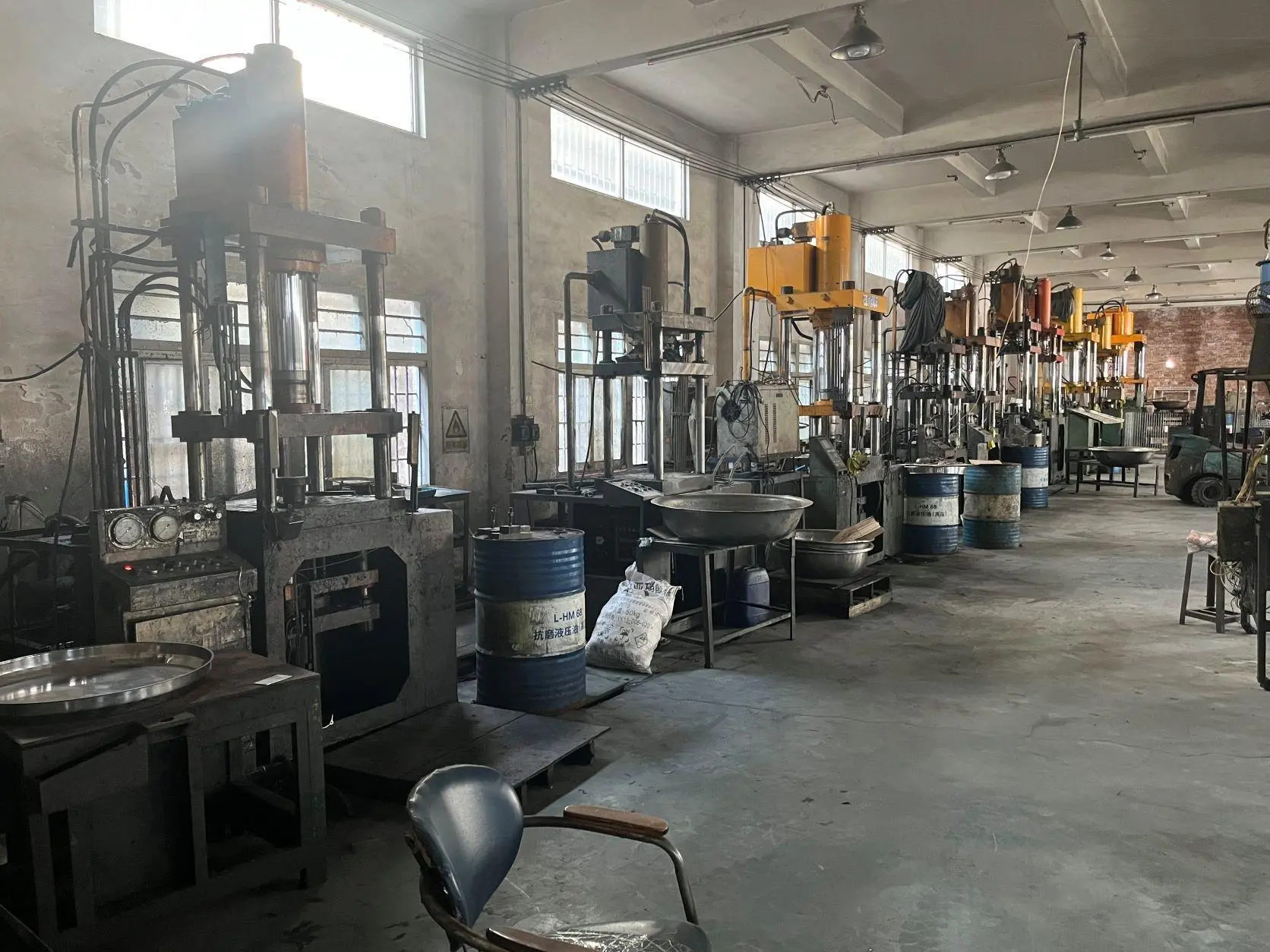
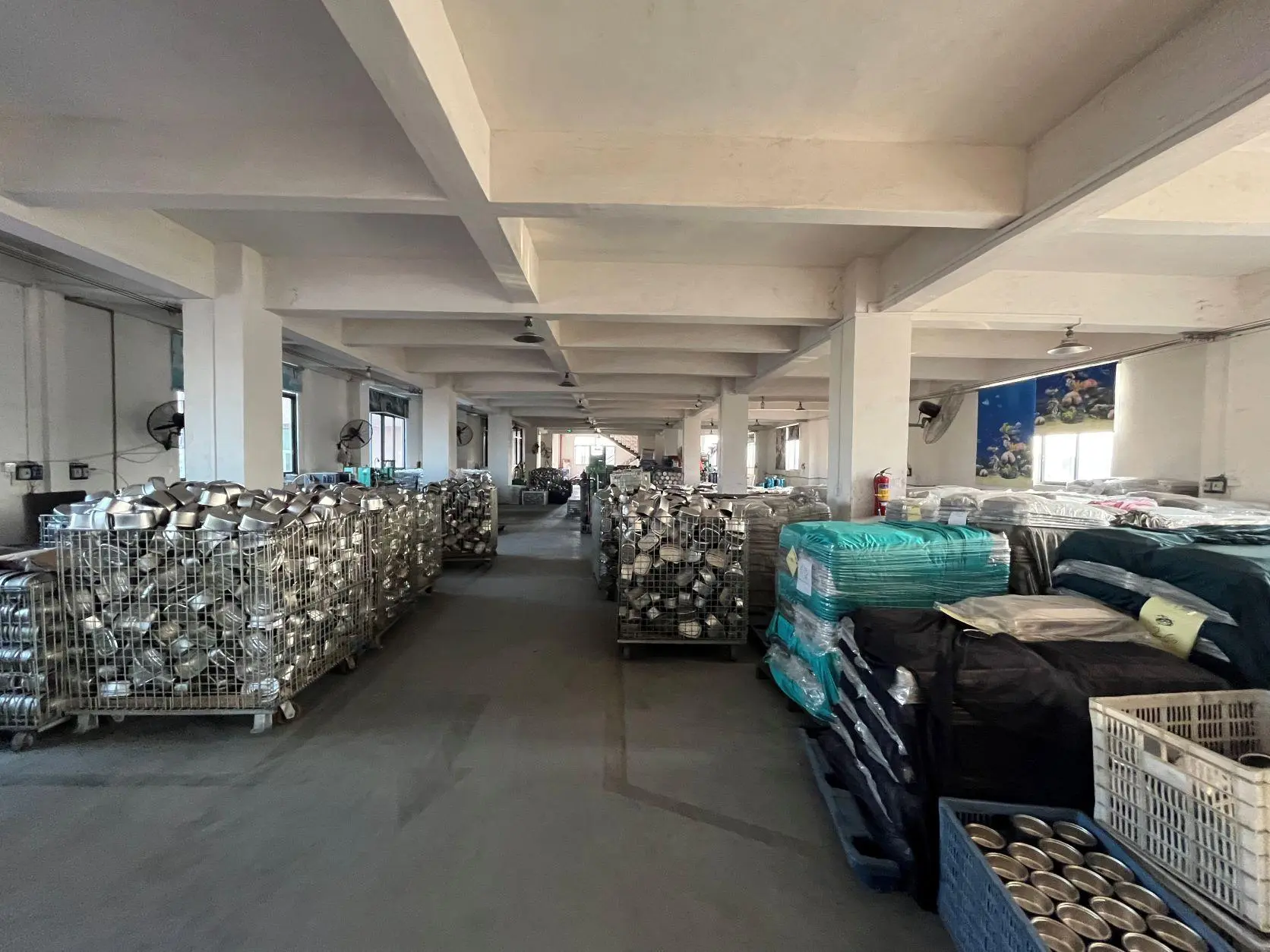
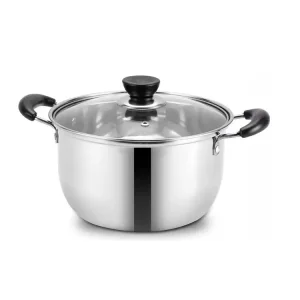
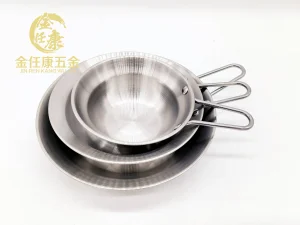
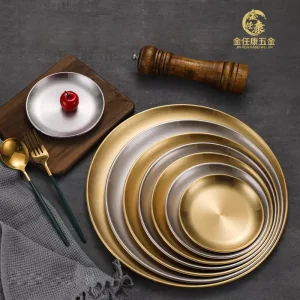
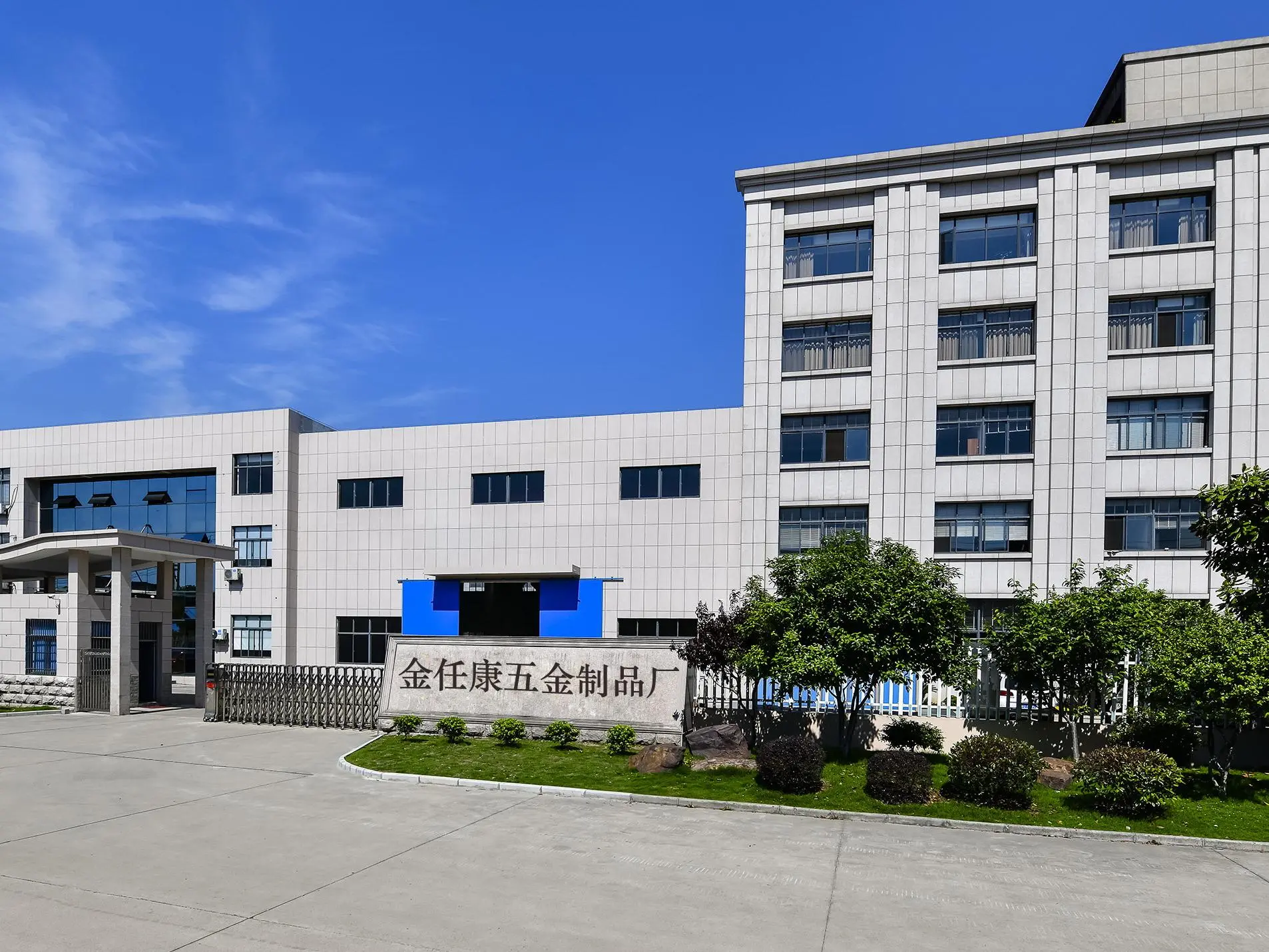
Chaozhou Jinrenkang Hardware Products Co., Ltd. is a large, highly professional stainless steel hardware development, design, and manufacturing export enterprise. Strategically integrating advanced research and development (R&D) and precision engineering with global sales networks, we focus on producing durable and safe stainless steel items. Our extensive product portfolio spans hundreds of specifications across key categories, including customized wire racks, steaming compartments, premium soup pots, and meal plates.

By adhering strictly to a quality-first operating principle, we have established stable partnerships with commercial procurement networks across more than 100 countries. Our annual global export value exceeds 40 million US dollars, testifying to our production efficiency and global delivery capacity. Under our core philosophy of "craftsmanship and excellence", we strive to lead the industry towards healthier, safer, and higher-quality hardware manufacturing.
Technical Roadmap: Load Deflection and Engineering Mechanics

How we design structural wire racks using scientific formulas to prevent structural failure under load stress.

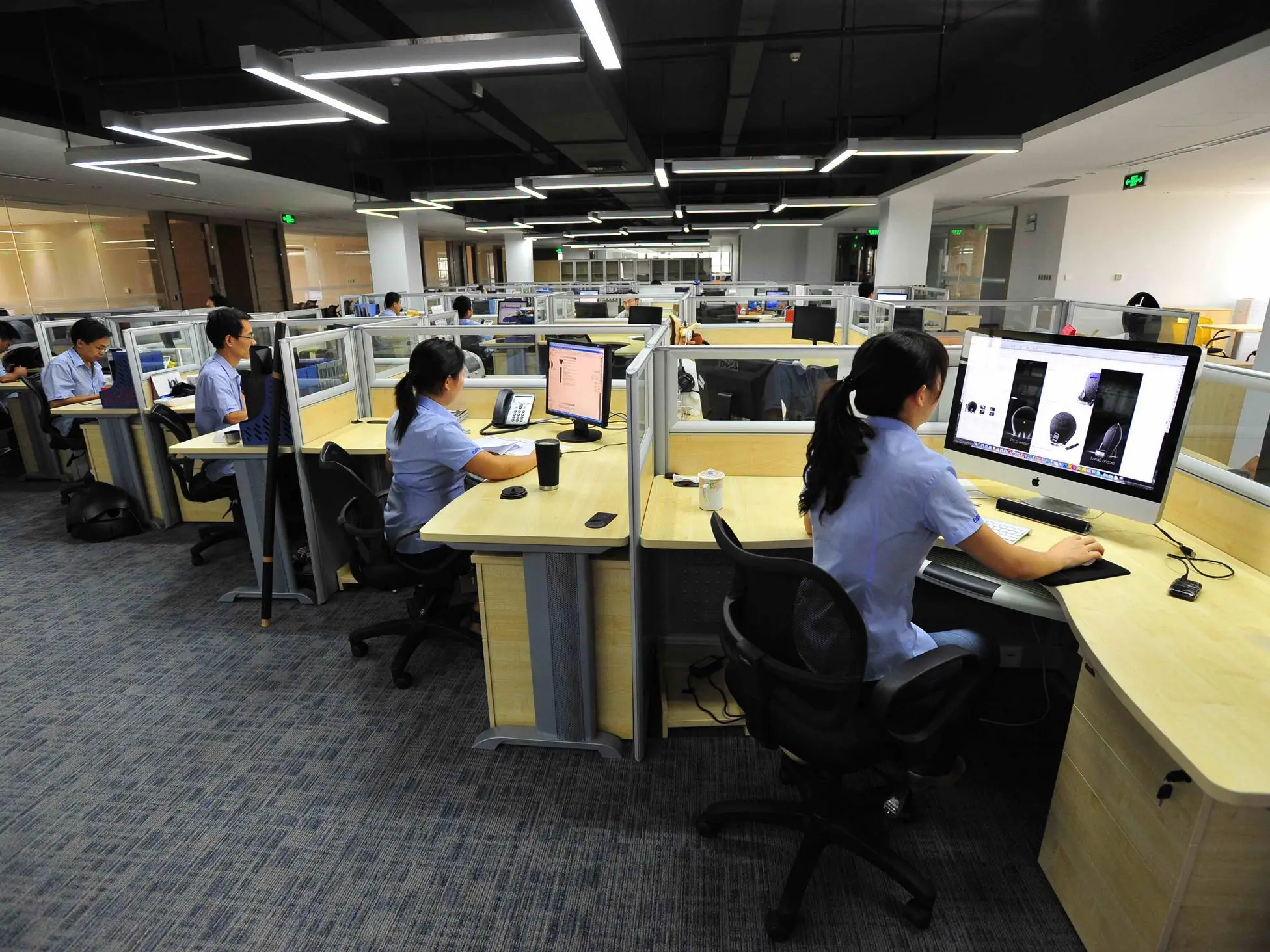
The primary engineering challenge in wire rack fabrication is maximizing load capacity while minimizing raw material weight. We achieve this optimization by applying finite element analysis (FEA) to our grid layouts before production begins. The mechanical performance of each shelf is governed by the structural beam deflection formula:

δ = (5 * W * L³) / (384 * E * I)

Where:

  • δ (Deflection): The downward displacement of the shelf center under load (must not exceed 0.5% of total span length for safety compliance).
  • W (Total Distributed Load): The weight uniform load distribution.
  • L (Span Length): Clear span width between upright corner support posts.
  • E (Modulus of Elasticity): For AISI 304 stainless steel, this is approximately 193 GPa.
  • I (Area Moment of Inertia): Calculated based on wire profile diameter and wire density. By increasing the depth of the perimeter truss and placing heavy-gauge wire ribbons, we increase I, yielding up to 40% reduction in deflection without adding excessive material weight.

By optimizing the moment of inertia through mechanical design rather than merely increasing wire thickness, we manufacture racks that deliver higher weight-to-mass ratios. This contributes to cost savings in shipping and raw materials, while guaranteeing maximum safety levels for commercial and industrial users.

Compliance, Traceability, & Global Export Standards

Ensuring complete certification alignment across global commercial markets including the United States, EU, and Australia.

Exporting to competitive markets like the United States, Canada, the United Kingdom, and the EU demands rigorous adherence to regional technical regulations. Chaozhou Jinrenkang Hardware Products Co., Ltd. guarantees alignment with all essential protocols:

  • NSF/ANSI Standard 2 Compliance: Certification ensures sanitary engineering design, meaning wire diameters, junction welds, and surface treatments are certified safe for food contact in commercial food service environments.
  • FDA Food Contact Certification: Raw materials undergo strict testing to ensure zero chemical migration (especially Lead, Cadmium, and Nickel ions) under simulated food acidic environments.
  • EU REACH & RoHS Compliance: Heavy metal restrictions are strictly monitored across all processing stages, ensuring no toxic chemical coatings are present.
  • Material Traceability (MTR): Complete mill test certificates are logged for every raw material batch, allowing end-to-end quality tracing from steel refinery to final wire assembly.

Industry Q&A & Technical FAQ

Technical guidance and sourcing advisory for procurement executives, quality engineers, and supply chain managers.

Q1: How does AISI 304 compare with AISI 201 steel in wire rack applications?
AISI 304 contains 18% Chromium and 8% Nickel, giving it a stable austenitic structure with high general corrosion resistance. In contrast, 201-grade stainless steel substitutes Nickel with Manganese and Nitrogen. While 201 exhibits high structural hardness, it features much lower corrosion resistance. When subjected to salt spray tests or acidic cleaning chemicals, 201 will corrode and rust within a fraction of the time of 304. For commercial food service and cleanroom environments, specifying AISI 304 or 316 is critical for safety compliance and durability.
Q2: What is electropolishing, and why is it preferred over mechanical polishing?
Electropolishing is an electrochemical process that removes a microscopic layer of metal from the surface, dissolving high points and burrs. This leaves a smooth, specular surface with no directional lines. Mechanical polishing uses abrasives which can leave micro-grooves where bacteria, grease, and biological matter accumulate. Electropolishing also selectively removes iron atoms, enriching chromium levels on the outer surface and significantly enhancing corrosion resistance.
Q3: How are load capacities calculated, and what safety factors are applied?
Load capacity is determined by structural thickness, wire span density, and support truss reinforcement. Under standard testing, static load limits are validated using uniform load distribution. We apply a minimum safety factor of 1.5 to 2.0. If a shelf has a designated rating of 300kg, it is engineered and tested to sustain up to 450-600kg before structural collapse, minimizing risks associated with localized off-center loads.
Q4: What customization (OEM/ODM) options are supported?
We provide full engineering support for custom wire gauges, grid pitches (spacing between deck wires), mounting bracket modifications, custom sizing, and custom branding/marking. Our design engineering team creates complete 3D CAD files for customer validation before hard tooling begins, ensuring all components fit seamlessly within existing logistics setups or warehouse configurations.
Q5: How does Chaozhou Jinrenkang guarantee quality control during bulk production?
Our quality control protocols cover incoming material inspection (spectral analysis of steel grade), automated inline weld testing, salt spray testing (ASTM B117), and final loading capacity trials. Our manufacturing facility has implemented ISO 9001:2015 quality management procedures to maintain process consistency across every export order.
All Stainless steel wire rack Products