Why Choose Stainless Steel Cooking Bowls?

Time:2026-10-08 Author:Mason
0%

Why Choose Stainless Steel Cooking Bowls?

Stainless Steel Cooking Bowls remain a practical choice for home kitchens, bakeries, and professional food preparation. Their smooth, non-absorbent surfaces resist lingering odors, sauces, and stains. A bowl should not become part of the recipe. That matters when mixing garlic, citrus, cream, or colored spices. The U.S. FDA Food Code, Section 4-101.11, recommends food-contact surfaces that are durable, corrosion-resistant, nonabsorbent, and easily cleanable. These requirements closely match the everyday strengths of well-made stainless steel bowls.

Industry evidence also supports stainless steel’s broad use. The International Stainless Steel Forum reported global crude stainless steel production of approximately 58.4 million tonnes in 2023. This scale reflects demand across food equipment, healthcare, manufacturing, and household products. NSF/ANSI 2 provides recognized sanitation criteria for commercial food equipment, including surface design and cleanability. However, certification depends on the complete product, not merely the metal label. That distinction is easy to miss.

In practical use, stainless steel bowls handle whisking, folding, chilling, and storing with little fuss. They are lightweight enough for one-handed mixing, yet stable on a countertop. Their thermal response also helps when preparing whipped cream over ice or warming ingredients indirectly. Still, stainless steel is not flawless. It can show scratches, fingerprints, and dents. Poorly finished rims may feel sharp, while low-quality alloys may discolor under harsh cleaning. Material choice helps, but careful manufacturing and proper washing matter more than marketing language. A reliable bowl should feel balanced, clean easily, and remain useful after hundreds of recipes.
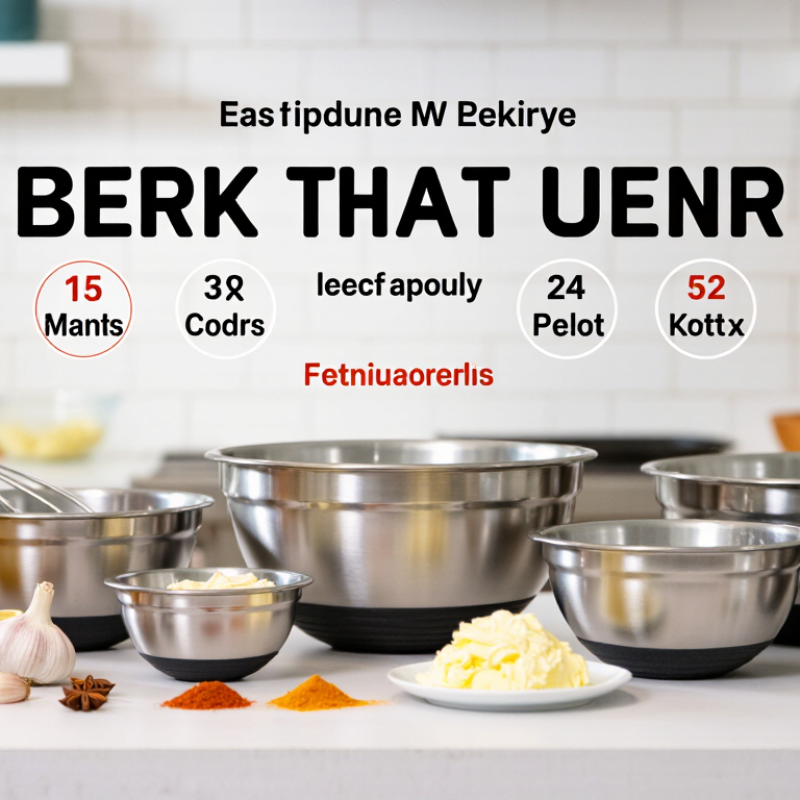
Why Choose Stainless Steel Cooking Bowls?

What Are Stainless Steel Cooking Bowls?

Why Choose Stainless Steel Cooking Bowls?

Stainless steel cooking bowls are reusable kitchen vessels made from corrosion-resistant steel. They are commonly used for mixing, whisking, marinating, kneading, and holding prepared ingredients. Unlike glass, stainless steel is lighter and less likely to shatter when dropped. Unlike plastic, it usually resists lingering odors and stains more effectively.

Quality matters. Food-grade stainless steel, such as 304 stainless steel, is widely valued for kitchen use because it handles moisture and acidic ingredients well. A smooth interior is easier to clean, while a rolled rim improves grip and pouring control. From my kitchen experience, a stable base makes whisking cream much easier. I still sometimes choose the wrong size, though. A bowl can look spacious but become crowded with rising dough.

Tips: Choose several sizes for different tasks. Check that the bowl sits firmly on the counter. Avoid using damaged or deeply scratched bowls. Dry them after washing to reduce water spots. Stainless steel can become hot near a stove, so handle it carefully. Also, do not assume every shiny bowl has the same durability. Thin metal may dent quickly. Small details matter.

How Stainless Steel Bowls Perform in Everyday Cooking

Stainless steel cooking bowls perform reliably during ordinary kitchen work. They handle whisking, folding, marinating, and chilling without absorbing odors or flavors. The U.S. FDA Food Code 2022 identifies food-contact surfaces as needing smooth, corrosion-resistant, nonabsorbent, and cleanable properties. Stainless steel fits these practical requirements when properly finished.

Heat behavior requires more thought. ASM Handbook, Volume 2, lists austenitic stainless steel near 15 W/m·K in thermal conductivity. Aluminum is roughly 237 W/m·K. This difference means a stainless steel bowl warms slowly and distributes heat less evenly over a burner. For daily cooking, that can help when melting chocolate over gentle steam. Direct high heat is less forgiving. I still use a thick towel or water bath.

It feels solid in the hand.

In my experience, the bowl’s weight improves stability while whisking eggs or tossing salad. Its smooth interior also releases beaten mixtures more easily than rougher surfaces. However, stainless steel is not flawless. Salt left in wet mixtures can encourage spotting, and hard water may leave cloudy mineral marks. The U.S. National Sanitation Foundation’s food-equipment guidance emphasizes cleanability and corrosion resistance, but maintenance still matters. Rinsing promptly, drying the bowl, and avoiding abrasive scouring preserve its working surface. The small inconvenience is real, especially after a rushed dinner.

What Makes Stainless Steel Bowls Durable and Hygienic?

In a busy kitchen, stainless steel cooking bowls handle repeated mixing, washing, and temperature changes. I have used them for dough, sauces, and marinated vegetables. Their rigid walls resist dents better than many lightweight alternatives. They also remain stable when a whisk moves quickly through thick batter.

Durability begins with the material’s corrosion resistance. Quality food-contact stainless steel contains chromium, which forms a protective surface layer. This layer helps the bowl resist rust and common kitchen acids. However, stainless steel is not indestructible. Strong saltwater left inside for hours may cause staining. Deep scratches can also make cleaning less convenient.

Hygiene depends on both the bowl and the user. Stainless steel has a smooth, nonporous surface. It does not readily absorb oils, odors, or food moisture. I wash bowls with warm water and mild detergent soon after use, then dry them fully. Trapped food around rolled rims or welded seams needs extra attention. They are not magic. A neglected bowl can still carry bacteria, especially after handling raw ingredients. I once left a flour-coated bowl overnight, and the dried paste required careful soaking. That small mistake showed me why simple cleaning habits matter more than appearance. Regular inspection also helps. Replace a bowl if severe pitting, sharp damage, or permanent residue appears.

Which Features Improve Their Versatility and Convenience?

Stainless steel cooking bowls become more useful when their design supports several kitchen tasks. A deep, rounded bowl holds batter without splashing during vigorous whisking. A flat base keeps it steady on a wet countertop. This small detail matters when one hand is busy. Many models include a pouring rim, which helps transfer soup, beaten eggs, or pancake batter with fewer drips. I find a wide rim easier to grip with oven mitts, although it can make storage slightly less compact.

Size variety improves everyday flexibility. A small bowl suits chopped herbs and measured spices. A medium bowl handles marinades, sauces, and two servings of salad. A larger bowl gives dough room to expand. Nested sizes save cabinet space, especially in a narrow kitchen.

Look for clear volume markings, but check their accuracy against a measuring jug. Printed lines may fade after repeated washing. Stainless steel also resists stains, odors, and acidic ingredients better than many porous materials.

It cleans quickly and usually tolerates a dishwasher, but sharp utensils can leave scratches. That is not a safety failure, yet rough surfaces can feel less pleasant over time. A cool, comfortable handle, a stable base, and a balanced weight make repeated preparation easier. These features seem ordinary. They change the work.

How to Choose the Right Stainless Steel Cooking Bowl

Why Choose Stainless Steel Cooking Bowls?

How to Choose the Right Stainless Steel Cooking Bowl

Stainless steel cooking bowls are durable, hygienic, and useful for mixing, marinating, and serving. Choosing the right bowl requires more than checking its appearance. Consider the capacity, shape, weight, and steel quality for your cooking habits. A deep bowl reduces splashes when whisking eggs or tossing salad. A wider bowl gives dough more room to move.

Check the bowl’s thickness and balance. A heavier base usually stays steadier on a wet countertop. The rim should feel smooth, without sharp edges or uneven welding. Look for a fitted lid if you prepare food ahead. If you use an induction hob, confirm that the bowl is designed for direct heat. Not every stainless steel bowl is suitable for stovetop cooking. I once chose a beautiful, lightweight bowl that moved constantly during mixing. It looked practical, but it was frustrating to use.

Tips: Match the bowl size to your usual portions. Choose a nesting set if storage space is limited. Inspect the base for wobbling before purchase. A mirror finish looks attractive, while a brushed finish often hides small scratches better. Check cleaning instructions, especially if the bowl has silicone grips or a sealed base. Avoid assuming “stainless” means maintenance-free; mineral stains and burned residue can still appear. A soft sponge, mild detergent, and prompt drying usually keep the surface reliable. Think about daily use, not just the first impression.

Why Choose Stainless Steel Cooking Bowls? - How to Choose the Right Stainless Steel Cooking Bowl

Key selection criteria for stainless steel cooking bowls
Selection Dimension Available Option or Specification Practical Benefit What to Check Before Buying Best Choice For
Stainless Steel Grade 304 stainless steel, commonly known as 18/8 stainless steel Offers good corrosion resistance and is suitable for most food preparation tasks. Look for clear material information and a smooth, food-contact surface.
Stainless Steel Grade 316 stainless steel, commonly known as marine-grade stainless steel Provides higher resistance to chlorides and salt-related corrosion than 304 stainless steel. Confirm that the entire food-contact bowl, rather than only a small component, uses 316 stainless steel.
Stainless Steel Grade 430 stainless steel Provides useful corrosion resistance and is magnetic, which may support induction-compatible accessories or storage features. Check whether the bowl is intended for food preparation and avoid prolonged contact with highly acidic or salty foods. Budget-conscious everyday preparation and dry-ingredient mixing
Durability Rigid body with a reinforced rim Helps the bowl resist deformation during mixing, pouring, and repeated handling. Press lightly on the sidewall and inspect the rim for flexing, sharp edges, or uneven finishing. Frequent baking and high-volume meal preparation
Wall Construction Single-wall design Usually lighter, easier to store, and more affordable. Check whether the wall feels stable enough for vigorous whisking or kneading. Basic mixing, serving, and compact kitchens
Wall Construction Double-wall or insulated design Reduces heat transfer to the exterior and can help maintain ingredient temperature for a longer period. Inspect the sealed construction and verify whether the bowl is intended for hot or cold applications. Temperature-sensitive preparation and professional-style cooking
Capacity 0.5–1.5 quarts (approximately 0.5–1.4 liters) Convenient for small portions, sauces, spices, and ingredient prep. Consider the amount of food and empty space needed to prevent splashing. Small households, sauces, and mise en place
Capacity 2–4 quarts (approximately 1.9–3.8 liters) Provides a versatile size for everyday mixing and food preparation. Check that the diameter fits your storage area and kitchen appliances.
Capacity 5–8 quarts (approximately 4.7–7.6 liters) Provides more room for batters, salads, dough, and larger food portions. Look for a stable base and a comfortable rim for lifting and pouring. Batch cooking, entertaining, and large families
Shape Deep, narrow-sided bowl Helps reduce splashing when using a whisk, hand mixer, or immersion blender. Make sure the base is wide enough to remain stable during vigorous mixing. Whipping, whisking, and liquid ingredients
Shape Wide, shallow bowl Makes it easier to combine ingredients, fold mixtures, and access food with utensils. Check the bowl depth if you plan to use an electric mixer. Salads, folding, coating, and serving
Base Design Flat, weighted, or non-slip base Improves stability and reduces movement during stirring and beating. Place the bowl on a smooth surface and test whether it rocks or slides.
Rim and Pouring Rolled rim or integrated pouring spout Improves comfort and helps control the flow of liquids and sauces. Run a finger carefully around the rim to check for smooth, burr-free finishing. Pouring batter, sauces, and liquids
Handles Handle-free design Uses less storage space and is easier to nest with other bowls. Confirm that the bowl can be lifted securely when full. Compact storage and bowl sets
Handles Integrated or rivet-free side handles Provides a more secure grip when moving a full bowl. Check that handles are firmly attached and do not trap food residue. Large-capacity bowls and frequent pouring
Compatibility Dishwasher-safe construction Makes routine cleaning easier and supports frequent use. Follow the care instructions because heat, detergents, and other materials can affect the finish. Busy kitchens and everyday meal preparation
Compatibility Nesting design Allows multiple bowls to stack inside one another, saving cabinet space. Check that the bowls separate easily and do not become tightly wedged. Small kitchens and multi-piece bowl sets
Temperature Use Suitable for chilled and room-temperature preparation Stainless steel does not absorb food odors or colors and is easy to clean when properly maintained. Use a separate heat-resistant utensil or follow the manufacturer’s temperature guidance for hot contents. Mixing, marinating, chilling, and food storage
Maintenance Smooth, polished interior without coatings Provides a non-porous food-contact surface that is less likely to retain odors and stains. Avoid abrasive cleaners and chlorine-based products unless specifically approved for the product.

Quick recommendation: For most home kitchens, a 304 stainless steel bowl with a smooth interior, reinforced rim, stable base, nesting design, and a capacity of 2–4 quarts offers a practical balance of durability, corrosion resistance, and everyday versatility.

FAQS

What are stainless steel cooking bowls used for?

They are reusable vessels for mixing, whisking, marinating, kneading, chilling, and holding ingredients. One bowl, many tasks.

Why choose stainless steel instead of glass or plastic?

Stainless steel is lighter than glass and will not shatter easily when dropped. It also resists lingering odors and stains better than many plastics.

What type of stainless steel is suitable for kitchen use?

Food-grade stainless steel is a practical choice for food preparation. A smooth interior supports easier cleaning and resists moisture and acidic ingredients.

What bowl shape works best for whisking?

A deep bowl helps control splashes, especially when whisking eggs or cream. A wider bowl gives dough more room to move.

How can I choose the correct bowl size?

Match the capacity to your usual portions and recipes. Rising dough needs extra space, even when the bowl looks large.

Can stainless steel bowls be used on a stove?

Not every stainless steel bowl is designed for direct heat. Check the instructions, and use gentle heat, steam, or a water bath when appropriate.

How should stainless steel cooking bowls be cleaned?

Rinse away salt and food residue promptly. Use a soft sponge and mild detergent, then dry the bowl to reduce water spots.

What problems can stainless steel bowls develop?

Hard water may leave cloudy mineral marks, while burned residue can require extra cleaning. Thin metal may dent quickly. Appearance alone is not enough.

How can I keep a bowl stable while mixing?

Choose a bowl with a balanced, heavier base and check for wobbling before purchase. I once ignored this detail, and the bowl kept sliding.

Conclusion

Stainless Steel Cooking Bowls are practical kitchen essentials designed for mixing, preparing, serving, and storing food. Made from strong, corrosion-resistant metal, they provide a reliable surface for everyday tasks such as whisking ingredients, preparing dough, tossing salads, and organizing ingredients before cooking. Their nonporous construction helps prevent the absorption of odors, flavors, and stains, while their smooth surface makes them easy to clean and maintain.

Their durability and hygienic qualities make stainless steel bowls suitable for frequent use in busy kitchens. Features such as nesting designs, stable bases, pouring rims, measurement markings, lids, and handles can improve convenience and versatility. When choosing the right bowl, consider its capacity, material thickness, shape, weight, stability, ease of cleaning, and storage requirements. Selecting a range of sizes can make food preparation more efficient and ensure that each bowl suits a different cooking task.


Mason

Mason

Mason is a seasoned marketing professional with a deep expertise in the company's offerings and a passion for driving brand awareness. With a strong background in digital marketing strategies, he has an innate ability to connect with diverse audiences and effectively communicate product benefits.......