A kitchen sink is a daily work surface, not merely a stainless steel bowl. It handles boiling water, sharp utensils, coffee grounds, and heavy cookware. That constant exposure makes material quality, bowl depth, drainage, and cleaning effort important decisions.
The 2024 U.S. Kitchen Trends Study from Houzz shows that homeowners continue investing in practical kitchen upgrades, especially features that improve function and everyday convenience. The National Kitchen & Bath Association also identifies durability, easy maintenance, and efficient layouts as recurring priorities in professional kitchen planning. These findings support a closer look at the Hammered Stainless Steel Sink, which combines stainless steel’s corrosion resistance with a textured surface that can disguise minor scratches and water marks.
Appearance still matters. A hammered finish can add visible character beneath warm pendant lighting, while a deep single bowl may accommodate a roasting pan more easily. However, texture is not magic. Food residue can collect in uneven patterns, and lower-grade steel may dent or discolor despite attractive styling. We considered gauge, steel composition, mounting method, sound insulation, drainage design, warranty coverage, and user feedback when shaping this selection.
No sink is perfect.
Some models may look impressive online but feel less refined in person. Others may clean quickly yet lack the depth needed for busy cooking. This guide compares ten leading options with a practical, experience-based perspective. It also recognizes an uncomfortable truth: the best Hammered Stainless Steel Sink depends on your cabinets, cleaning habits, cookware, and tolerance for visible wear.
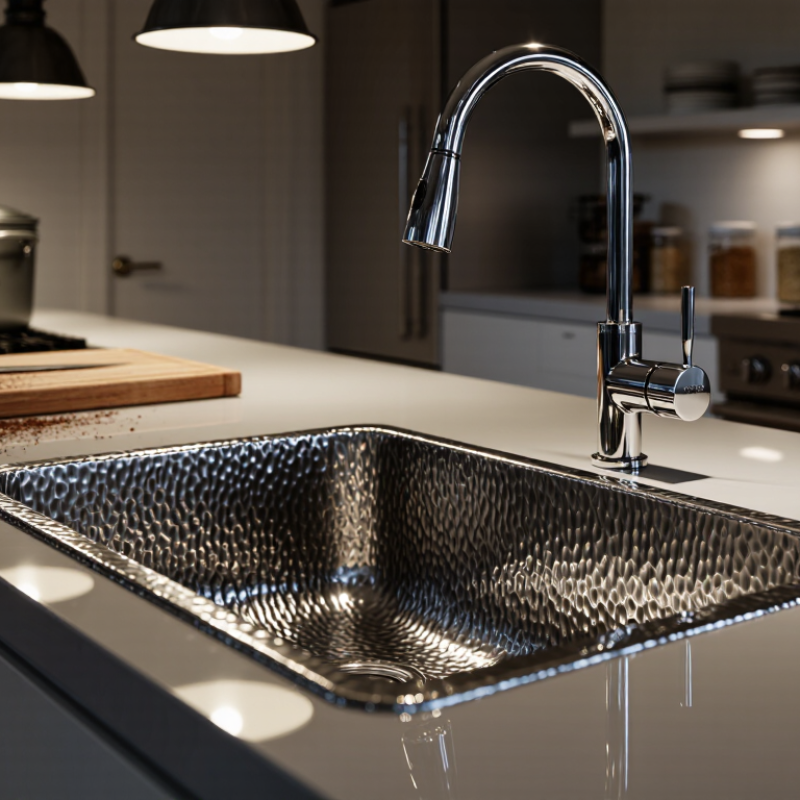
Hammered stainless steel sinks are shaped with repeated dimples, not a flat brushed finish. These small depressions scatter light and soften reflections from overhead fixtures. They also disguise fine scratches, dried droplets, and minor marks better than smooth metal. The effect feels tactile, almost like a shallow metal basket.
Texture is not the same as strength. A hammered bowl may still dent if its steel is thin or poorly supported. Check the gauge, bowl depth, sound-dampening pads, and mounting system.
Stainless steel also has a strong sustainability case. World Stainless reports that stainless steel contains about 60% recycled material on average, although the figure varies by product and region. I would not treat every textured sink as maintenance-free. Deep dimples can hold grease around the drain area.
Tips: Run a soft nylon brush across the texture after washing. Avoid steel wool, bleach mixtures, and abrasive powders. Use a microfiber cloth for water spots. Before buying, place a sample under your kitchen lighting. Some patterns look elegant in a showroom but appear visually busy at home. A slightly imperfect finish can still be the more practical choice.
When comparing hammered stainless steel sinks, start with construction, not appearance. A thicker steel body usually resists dents and reduces vibration. In daily use, this matters when heavy pans hit the basin. Look for 16- or 18-gauge steel, but verify the measurement. Specifications are not always presented consistently. A corrosion-resistant stainless grade, such as 304, can offer dependable kitchen performance.
Study the hammered finish closely. A balanced texture can disguise light scratches, while deep dimples may collect food particles and mineral deposits. Run your hand across the surface. It should feel even, without sharp edges or rough welds. Check the bowl depth, drain position, and corner radius too. A deep bowl handles tall cookware, but it may strain your back. Tight corners provide more room, yet they take longer to clean. There is no perfect shape.
Installation also deserves careful attention. Undermount designs create a clean counter transition, while top-mount models can suit quick replacements. Confirm cabinet clearance before ordering. Sound-absorbing pads and a protective coating underneath can reduce clattering and condensation. Check whether the drain opening matches your existing plumbing. An attractive sink may still cause trouble if the fittings do not align. I would also inspect the included grid and basket, because thin accessories often wear sooner than expected. A long warranty helps, but clear care instructions are more useful in everyday life.
Hammered stainless steel sinks bring texture to modern kitchens without adding visual clutter. The dimples catch soft light, much like brushed metal under a window. For a clean, contemporary look, an undermount single-bowl style creates an uninterrupted countertop edge. Houzz’s 2024 U.S. Kitchen Trends Study identifies undermount sinks as the leading installation choice in renovated kitchens. That supports the style’s practical appeal.
Apron-front hammered sinks suit kitchens with warmer, furniture-like cabinetry. Their exposed face becomes a deliberate design feature. Workstation models add sliding accessories for rinsing, chopping, and drying. This fits the NKBA 2024 Kitchen Trends Report, which highlights multifunctional zones and efficient storage as major kitchen priorities. A compact bar or prep sink can repeat the hammered finish on a kitchen island. Small detail, strong continuity.
Texture also has a working advantage. Fine hammer marks can disguise light scratches and water spots better than a perfectly smooth surface. Yet they are not maintenance-free. Deep patterns may hold food particles, especially around the drain. I would inspect the dimple depth, corner radius, steel thickness, and sound insulation before choosing a style. The U.S. Environmental Protection Agency’s WaterSense program promotes efficient water use, but a textured sink does not automatically save water. That assumption needs challenging. Pair the basin with a low-flow faucet and sensible washing habits instead.
This comparison shows the typical nominal gross basin capacity of ten popular hammered stainless steel sink configurations. Values are calculated from representative interior dimensions using length × width × depth ÷ 1,000; actual usable capacity is slightly lower because of rounded corners, drains, and bowl shaping.
A hammered stainless steel sink needs careful installation before it can perform well for years. Check the cabinet opening, countertop thickness, and drain position before cutting. A level base prevents standing water and uneven wear. Use the supplied mounting hardware and a continuous bead of kitchen-grade sealant around the rim. Tighten clips gradually; excessive pressure can distort the sink or countertop. Confirm that the drain connection stays dry after running water for several minutes.
Maintenance is simple, but consistency matters. Rinse away salt, coffee grounds, and acidic food after use. Dry the basin with a soft cloth to reduce water spots and mineral buildup. Clean with mild dish soap and a non-abrasive sponge. Avoid steel wool, harsh scouring powders, and bleach-based products, which may dull the protective surface. The textured finish hides small marks, but it can also hold fine debris. Inspect the drain, clips, and sealant every few months. A loose fitting can become a costly leak.
Tips: Place a rubber grid or soft mat inside the basin. Lift heavy cookware instead of dragging it. Wipe along the steel’s grain, even when the pattern looks irregular. If mineral deposits remain, use diluted white vinegar briefly, then rinse thoroughly. Test a hidden area first. No routine is perfect, and I still think many owners underestimate drying. That small habit often protects the finish better than occasional deep cleaning.
Choosing among the 10 best hammered stainless steel sinks starts with your daily kitchen habits. Measure the cabinet opening, not only the countertop cutout. A deep bowl suits large pots, but it may strain your back. I once chose a beautiful sink with poor clearance. The installation became unnecessarily difficult.
Check the steel thickness, surface texture, drainage, and sound insulation. Hammered patterns can hide light scratches and water marks, yet deep dents may collect residue. Look for a gently sloped base that guides water toward the drain. Confirm whether the sink supports your preferred faucet, soap dispenser, or filtration tap. A reliable sink should resist corrosion, tolerate hot cookware, and remain easy to clean. Avoid judging quality from appearance alone.
Tips: Match the bowl size to your largest pan. Leave space behind the faucet for cleaning. Ask for accurate cutout dimensions before ordering. Test the rim with a straightedge if possible; uneven edges can cause sealing problems. Choose rounded interior corners for easier wiping. Small details matter. Also, consider your water hardness and cleaning routine. A textured finish still needs regular drying, especially around the drain and mounting edge. My own preference changed after using a very deep basin; it held more dishes, but cleaning the bottom was uncomfortable. Your height and cabinet design may lead to a different choice.
| Sink Type | Overall Size | Bowl Configuration | Material and Gauge | Bowl Depth | Installation Style | Drain Size | Noise Control | Best For | Typical Price Range |
|---|---|---|---|---|---|---|---|---|---|
| Single-Bowl Farmhouse Sink | 33 × 20 × 10 in | One large bowl | 304 stainless steel, 16 gauge | 10 in | Apron-front or cabinet-supported | 3.5 in standard opening | Full undercoating with sound-absorbing pads | Large cookware, roasting pans, and busy family kitchens | $350–$750 |
| Workstation Single Bowl | 33 × 19 × 10 in | One bowl with integrated ledges | 304 stainless steel, 16 gauge | 10 in | Top-mount or undermount | 3.5 in standard opening | Rubber damping pads and protective coating | Meal preparation, rinsing, and kitchens with limited counter space | $300–$650 |
| Equal Double-Bowl Sink | 33 × 22 × 10 in | Two equal bowls, approximately 50/50 split | 304 stainless steel, 18 gauge | 10 in | Top-mount or undermount | Two 3.5 in openings | Sound-deadening pads and undercoating | Separating washing and rinsing tasks | $220–$500 |
| Low-Divide Double Bowl | 33 × 19 × 10 in | Two bowls with a low center divider | 304 stainless steel, 16 gauge | 10 in | Undermount or flush-mount | Two 3.5 in openings | Full undercoating with bowl pads | Flexible washing while accommodating wider cookware | $300–$650 |
| Compact Single Bowl | 25 × 18 × 9 in | One bowl | 304 stainless steel, 18 gauge | 9 in | Top-mount or undermount | 3.5 in standard opening | Localized sound pads | Small kitchens, apartments, and kitchen islands | $160–$350 |
| Bar or Prep Sink | 15 × 15 × 8 in | One compact bowl | 304 stainless steel, 18 gauge | 8 in | Undermount or top-mount | 3.5 in standard opening | Sound-absorbing pads | Wet bars, beverage stations, and secondary prep areas | $120–$280 |
| Extra-Deep Single Bowl | 36 × 19 × 12 in | One extra-large bowl | 304 stainless steel, 16 gauge | 12 in | Undermount or apron-front | 3.5 in standard opening | Heavy undercoating and full bowl pads | Professional-style cooking and oversized cookware | $400–$850 |
| Corner Double-Bowl Sink | 33 × 22 × 9 in | Two offset bowls | 304 stainless steel, 18 gauge | 9 in | Top-mount, designed for corner layouts | Two 3.5 in openings | Undercoating with vibration-damping pads | Corner cabinet installations and traditional layouts | $250–$550 |
| Rounded-Corner Single Bowl | 30 × 19 × 10 in | One bowl with gently curved corners | 304 stainless steel, 16 gauge | 10 in | Undermount or flush-mount | 3.5 in standard opening | Full sound-dampening coating | Easy cleaning and contemporary kitchen designs | $250–$600 |
| Hand-Hammered Apron Sink | 30 × 20 × 10 in | One bowl with textured apron front | 304 stainless steel, 16 gauge | 10 in | Apron-front installation | 3.5 in standard opening | Protective coating and sound-absorbing pads | Rustic, transitional, or farmhouse-style kitchens | $350–$800 |
| Selection note: Confirm cabinet width, countertop cutout dimensions, plumbing position, bowl depth, and faucet-hole requirements before purchasing. Gauge, dimensions, drain openings, and prices shown are typical specifications for this sink category and may vary by model. | |||||||||
Choose 16- or 18-gauge steel, then verify the actual measurement. Thicker steel usually reduces dents and vibration.
Not always. Shallow, even dimples can hide light scratches, while deep dents may trap crumbs and mineral deposits.
Run your hand across the basin. The surface should feel even, without sharp edges, rough welds, or uncomfortable ridges.
A deep bowl can hold tall pots and large pans. However, reaching the bottom may strain your back during cleaning.
Measure the cabinet opening, not only the countertop cutout. Check clearance for the basin, plumbing, faucet, and mounting hardware.
Undermount sinks create a smooth counter transition. Top-mount models may simplify replacement work, especially with an existing opening.
Look for a gently sloped base leading toward the drain. Confirm the drain opening matches your current plumbing before ordering.
Yes. Sound-absorbing pads can reduce clattering, while underside coatings may limit condensation. Small details matter.
Check the included grid and basket for sturdy construction. Thin accessories can wear quickly, despite an attractive sink appearance.
Consider water hardness, drying habits, and corner shape. Rounded corners wipe more easily, but every textured basin still needs regular care.
Choosing the right Hammered Stainless Steel Sink can add durability, texture, and visual character to a modern kitchen. Its hand-finished surface helps disguise minor scratches and water marks while creating a distinctive look that differs from smooth stainless steel. Before making a decision, compare gauge thickness, basin depth, sound insulation, drainage design, finish quality, and compatibility with your countertop and cabinet layout. Popular styles include single-bowl, double-bowl, farmhouse, undermount, and workstation designs, each offering different benefits for cooking, washing, and multitasking.
Proper installation is essential for stability, water control, and long-term performance. Regular cleaning with mild soap, a soft cloth, and gentle drying can help preserve the hammered texture and prevent buildup. Avoid harsh abrasives and stagnant water that may affect the finish over time. Ultimately, the best sink should match your kitchen’s size, workflow, design preferences, maintenance habits, and budget, providing a practical balance of style, strength, and everyday convenience.

Jinrenkang Hardware